
Restorative Justice for Greek-born Adoptees
The New Anglo-Hellenic Review
By Gonda Van Steen, Koraes Professor of Modern Greek and Byzantine History, Language and Literature, Kings College London.
The term ‘restorative justice’ is easily used (and abused) in current global contexts. The phrase captures the principle that an injustice of the past needs to be corrected with input from those affected, whose voices deserve to be amplified and whose experiences merit scholarly as well as broader public attention. Through acts of restorative justice, an entire community will then be able to move forward towards healing. A nation will be able to rebuild responsible connections centred on systemic solutions beyond punishment or prejudice. Individuals, families, communities, and nations will be encouraged to strive for the kind of remedial acknowledgement that keeps firmly focused on the future.
In the context of twentieth-century Greece, only very few instances of successfully achieved restorative justice can be invoked. And they raise questions about just how deep the sense of genuine restoration runs. But a recent example may well become a schoolbook case of how an injustice of the past can still be restored. Let me explain and add some references for further reading and study.
Between 1950 and 1975, Greece sent out some 4,000 Greek-born children for adoption abroad. Some children were up to 14 years old and had planted deep roots in their families, villages, and even in the care facilities which they shared with many other displaced, orphaned, or abandoned youngsters. Most of these Greek-born children were raised in the United States, which, from the post-WWII years on, eagerly looked towards war-torn European countries as pools of white, healthy, and easily adoptable children. Greece complied, without asking too many questions and without following up on the fate (or the legal status) of its many young citizens. In this mass movement, the Greek citizenship of the vast majority of these children became inactive. Many of the earliest Greek-to-American adoptions were not properly documented, which posed huge problems to the adult adoptees who were keen to regain their Greek citizenship. This desire has not been about a piece of paper. It has been, rather, about restoring a first identity. Sometimes the only fact that the adoptees could know with certainty about their early lives was that they were Greek. Especially the 1950s were marked and marred by the phenomenon of hundreds of anonymously abandoned Greek babies, who were presumed to be the ‘illegitimate’ children of unwed mothers, but were most certainly the children of unsupported mothers.
I personally encountered this deep desire of the Greek-born adoptees to restore their first identity in the course of my fourteen years of research on the Greek-to-American adoptions, which involved archival work as well as detailed interviews. The history of these adoptions remained to be written in English. Moreover, I sensed that any publication that recognised their individual experiences and collective history and also their demands could have a restorative effect. I was and remain eager to contribute to the research and the impact associated with the Greek adoption history, which parallels the Italian, Irish, Korean, and other post-WWII adoption histories.
But there were still the obstacles on the path to restoring Greek citizenship: the uncooperative institutions, the (supposedly) non-existing adoption files, the employees at Greek consulates who had never heard of the Greek adoption history … It took years of research-informed advocacy to demand unfettered access for the adoptees to their own adoption files and for them to use these records to reactivate their Greek citizenship. The process (in fact, the absence of clear process) was so hard that many adoptees just gave up … Some have passed away. The solution seemed far off, and I needed some serious help.
Formidable partners joined me in the campaign that we called ‘Nostos for Greek Adoptees’: Dr Mary Cardaras and Stephanie Pazoles, adoptees themselves, joined with great enthusiasm and each brought a new set of skills. We also benefited from the pro bono legal advice of Olympia Anastasopoulou, from the American diaspora support in the voice of Ilias I. Katsos, from the Greek genealogy expertise of Gregory Kontos, and from the attention of media and press outlets. It literally took a transnational ‘village’ to restore a child—and, sadly, that ‘village’ was beleaguered by people who stood ready to plagiarise and monetise our hard-won results (to this day). With Mary Cardaras, I took the demands of the Nostos campaign to Prime Minister Kyriakos Mitsotakis on 17 September 2024. He indeed called the adoption case a ‘historical injustice’ in need of redress.
Then began the meticulous work of Dr Athanasios Balermpas, who had been following the adoption case since 2021, after I first made contact in my efforts to raise awareness and seek practical solutions. As Secretary General of the Greek Ministry of Interior, and with a deep appreciation for scholarship, Dr Balermpas and his team went to work and, over the course of seven months, created a manageable pathway for the Greek-born adoptees to restore their Greek citizenship. The related law was published on 2 May 2025 and has benefited many adoptees since, whose children, too, can now apply for Greek citizenship.
Restoration to the wholeness of one’s person and private experience, recognition by one’s country of birth, acknowledgement of painful family histories has seldom meant more. Greece has left a paradigmatic solution that is a model of restorative justice. This solution cannot but become an inspiration whenever the theory and praxis of (re-)naturalisation are concerned (not only in the adoptee diaspora but in diasporas and refugee communities at large). Lastly, this model will become a point of reference for other countries still grappling with their own histories of adoption, displacement, and marginalisation of the voiceless.
Suggestions for Further Reading, Viewing, and Searching:
The author gladly makes the following documents available to Greek-born adoptees:
-‘Practical Information for Greek-born Adoptees’, updated from the 2019 book Adoption, Memory, and Cold War Greece, by Gonda Van Steen.
-‘Suggestions for Further Reading on the Topic of Intercountry Adoptions from Greece in the post-WWII and Cold War Period (1948-1960s)’
-‘How to Restore Your Greek Citizenship according to the New Law of 22 April 2025/FEK 2 May 2025’, webinar accessible online at
https://www.youtube.com/watch?v=05P9PrwRmuY.
-‘Adoption, Memory, and Reform: How Is Greece Shaping Policy for Its Diaspora’, panel related to the Greek policy and legal change on behalf of Greek-born adoptees, with Dr Athanasios Balermpas, Secretary General, Greek Ministry of Interior, Dr Giorgos Samaras, and Dr Mary Cardaras (19 November 2025). Recording: https://youtu.be/vMPKQejunbo.
-G. Van Steen, ‘New Developments in “Old” Adoptions from Greece: When the Future Finally Catches up with the Past’, in History and Policy, 22 August 2025: https://historyandpolicy.org/policy-papers/papers/new-developments-in-old-adoptions-from-greece-when-the-future-finally-catches-up-with-the-past-to-%ce%b1%ce%bd%ce%b5%cf%80%ce%b9%ce%b8%cf%8d%ce%bc%ce%b7%cf%84%ce%bf-%cf%84%ce%ac/

Much anticipated: Photograph of Stephanie Pazoles proudly holding her newly issued Greek passport, along with her American passport, 4 September 2025.
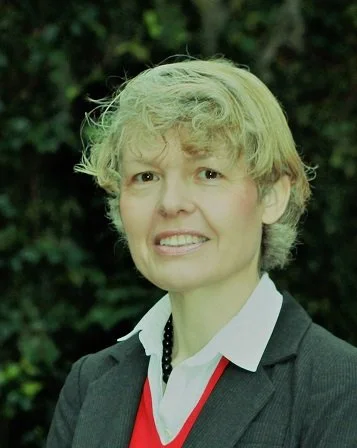
Gonda Van Steen holds the Koraes Chair of Modern Greek and Byzantine History, Language and Literature in the Department of Classics at King’s College London. She is the author of many articles and five books: Venom in Verse: Aristophanes in Modern Greece; Liberating Hellenism from the Ottoman Empire; Theatre of the Condemned: Classical Tragedy on Greek Prison Islands; Stage of Emergency: Theater and Public Performance under the Greek Military Dictatorship of 1967-1974; and Adoption, Memory, and Cold War Greece.
*Contact: Gonda van Steen, Koraes Chair of Modern Greek and Byzantine History, Language and Literature, Dept. of Classics, King’s College London, gonda.van_steen@kcl.ac.uk or gondavs@gmail.com
All articles posted on this blog give the views of the author(s), and not necessarily the views or the position of the Anglo-Hellenic League.